Phone
+91 7845455124
Aesthetic Dentistry
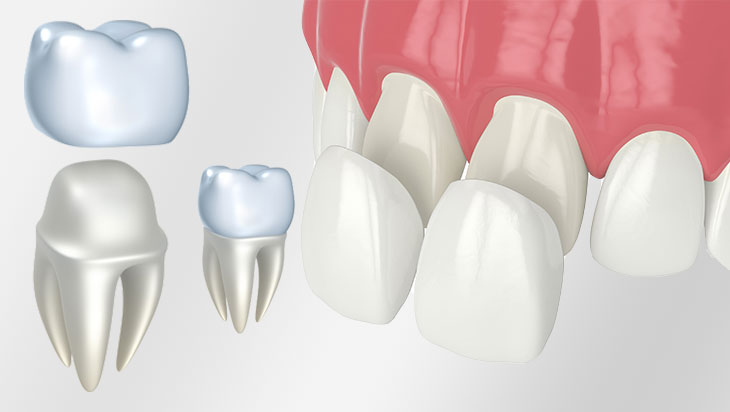
Aesthetic dentistry refers to any dental treatment that enhances the appearance of the teeth, gums, or bite. The goal of aesthetic dentistry is to improve the visual aspect of the teeth, including their color, position, shape, size, alignment, and overall smile appearance.
A dental crown is a cap that is shaped like a tooth and placed on a damaged or decayed tooth to improve its appearance, size, shape, and strength. When most of a tooth is missing, a crown is the optimal solution to restore it to its normal function.
Dental crowns are required in order to:
- Prevent or restore a tooth from fracturing as a result of an accident or trauma.
- Replace a tooth that is too large to accept a filling.
- Get a cap over the implant installed.
- Restore the tooth that was subjected to RCT.
- Cover a tooth that is discoloured, misshaped, or poorly formed.
- If you need a bridge, crowns are a must.
Types of Crowns
Metal Crowns
For those seeking a long-lasting and sturdy solution, metal crowns provide the solution. Gold crowns are the most commonly used and provide a strong grip on the tooth. These crowns can handle tough chewing and biting forces and last for a longer time as they are stronger. However, their metal appearance can be noticeable, making them only suitable for molars.
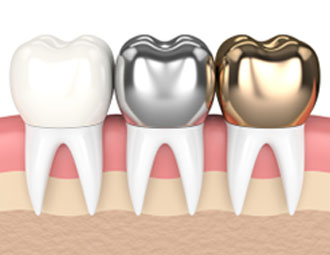
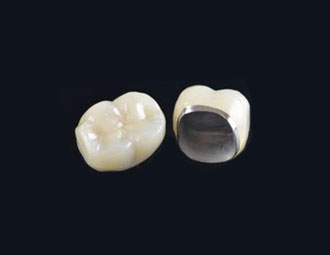
Porcelain fused to metal or Metal ceramic crown
If you want both strength and appearance, metal-porcelain crowns are your best bet. These crowns have a metal interior for strength and a porcelain exterior that matches the color of your teeth, giving them a natural look.
Zirconia crowns
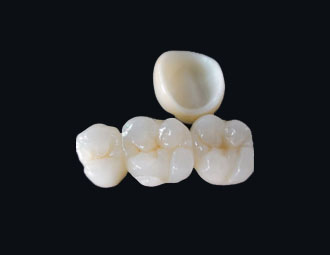
Ceramic crowns are an ideal option for those who do not want metal in their mouth but still need the strength of metal crowns. These crowns are strong, blend in with the natural color of your teeth, and have no aesthetic issues. They are a great choice for the front, back, and even bridges and solve the problem of porcelain deterioration and metal showing through. However, they may not be suitable for molars due to the chewing forces.
Veneers are a cosmetic dental solution for fixing chips, irregularities, and discoloration in teeth. They can be made of either porcelain or composite material, and they are a good alternative to crowns if the affected tooth is strong and healthy.
Veneers offer a permanent and comfortable way to achieve the desired appearance of your teeth. They are durable, comfortable to wear, and mimic the appearance of natural teeth.
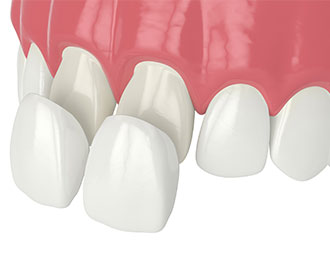
Benefits of veneers:
- Improve your appearance
- Enhanced your bite function
- Improve your confidence
- Convenient
In veneers treatment, tooth-colored shells known as laminates are custom-fit to be attached to the front of the teeth. To prepare for porcelain veneers, a small portion of the tooth's front surface may be removed, and then the tooth is covered with a thin piece of porcelain that is cemented in place. An alternative method for achieving veneers is through the use of composite material, which is achieved by layering bonded ceramic composite on the surface of the tooth.
Teeth whitening involves lightening the color of your teeth to give them a brighter appearance. The procedure will not change the natural shade of your teeth, but rather lighten it by a few tones.
Who is qualified to perform teeth whitening?
Only a dentist or other regulated dental professional such as a dental hygienist or dental therapist should perform teeth whitening, as it is a type of dentistry. While over-the-counter teeth whitening kits are available, they come with potential risks.
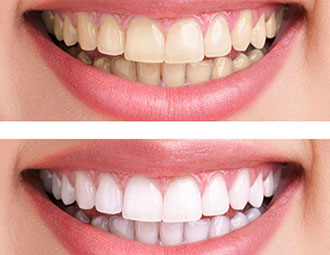
What happens when you whiten your teeth?
The teeth whitening process typically involves visiting the dentist two or three times. The dentist will take a mold of your teeth to create a mouthguard and provide instructions for using it with a bleaching gel. You will use the mouthguard at home to apply the gel over a period of time, which can be anywhere from a few weeks to several hours per day.
In some cases, the dentist may offer laser whitening, also known as power whitening, which involves applying a bleaching product to your teeth and activating it with a light or laser. This process typically takes about an hour.
It is illegal for beauty salons to offer teeth whitening services without a dental professional present and could potentially harm your oral health.