Phone
+91 7845455124
Tooth Replacements
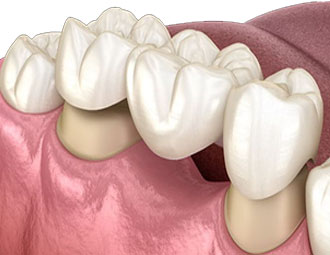
Dentures also commonly known as false teeth are fitted to act as prosthesis for missing teeth.
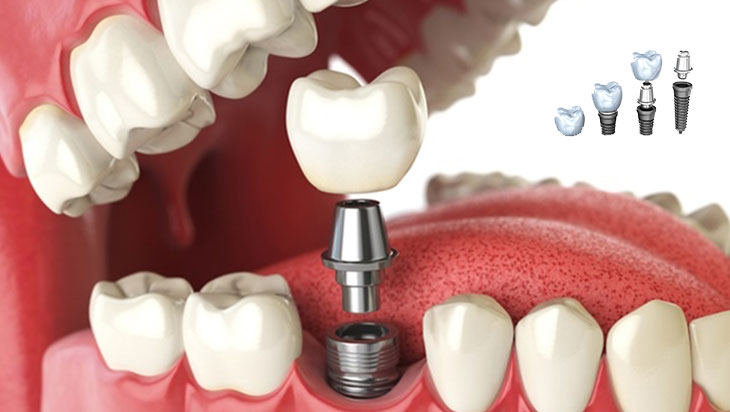
A dental implant is a small screw made of titanium that is surgically inserted into the jawbone beneath the gum line. This post fuses with the jawbone to provide a strong base for a tooth restoration.
The dental implant post serves as a replacement for the root of a missing tooth and not only fuses with the bone like a root but also helps maintain and preserve the bone structure.
The dental implant post is then topped with a restoration. Typically, a single crown is used to replace a single missing tooth, while bridges or dentures can be used to support multiple missing teeth.
With proper care, dental implants can last a lifetime and have a high success rate of 98%.
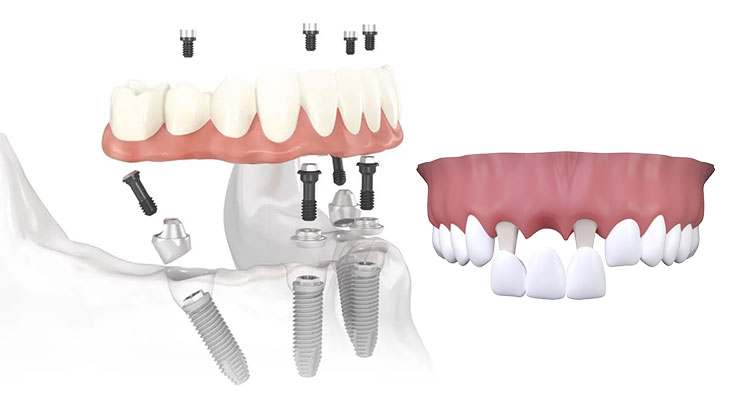
The All On 4 dental implant procedure involves replacing a full upper or lower set of teeth using only four implants. These four implants act as a base for a new set of permanent teeth to be attached.
During the procedure, the posterior implants are angled 45 degrees towards the back of the mouth and positioned in the front part of the jaw, which has a higher density of bone. This approach allows for the All On 4 procedure to be performed with a lower level of bone density compared to other implant methods.
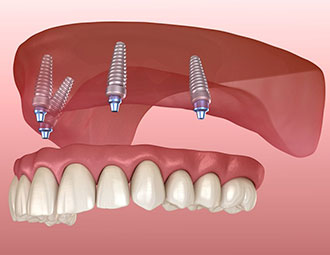
An implant-supported bridge is a dental restoration that consists of artificial teeth supported by dental implants rather than attached to adjacent natural teeth. The procedure of placing an implant-supported bridge is similar to that of a single tooth implant.
However, instead of inserting an implant for every missing tooth, only the two ends of the gap receive implants, which then serve as anchors for the bridge. This allows for the replacement of multiple missing teeth in a row with one procedure, reducing the cost of individual tooth replacements.
One potential downside of this method is that not all of the missing teeth will receive implants, potentially leading to bone loss over time.